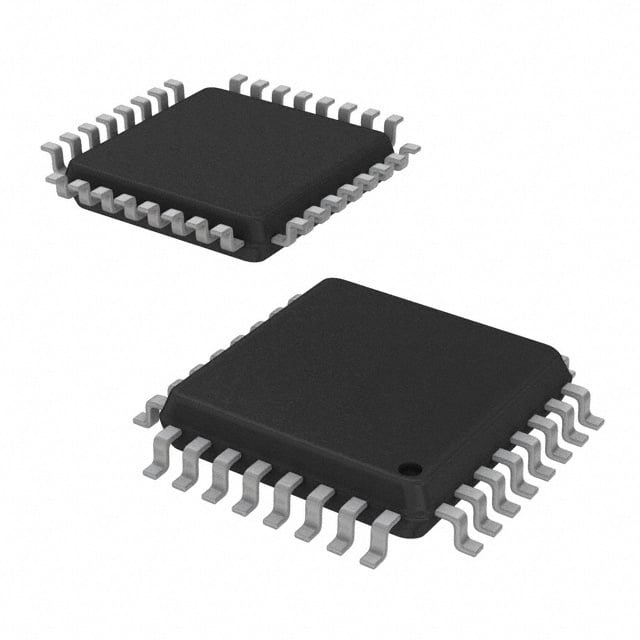
## Overview of NXP Semiconductors S9S08RN60W1VLH
The NXP Semiconductors S9S08RN60W1VLH is a member of the S08 family of microcontrollers, designed for a broad range of embedded applications. It is particularly tailored for automotive and industrial applications where reliability, performance, and low power consumption are critical. This microcontroller integrates various features that make it suitable for tasks such as motor control, sensor interfacing, and general-purpose processing.
## Key Features
1. Core Architecture:
- The S9S08RN60W1VLH is based on the 8-bit S08 core, featuring an efficient instruction set and architecture that allows for fast execution and low power usage.
2. Clock Speed:
- The microcontroller operates at clock speeds up to 60 MHz, providing ample processing power for demanding applications.
3. Memory:
- Flash Memory: The device includes 60 KB of Flash memory, which is programmable and erasable, allowing for flexibility in application development.
- RAM: It boasts 4 KB of SRAM, suitable for variable storage and runtime operations.
- EEPROM: The S9S08RN60W1VLH includes 4 KB of EEPROM, facilitating non-volatile storage for calibration data and configuration settings.
4. I/O Ports:
- The microcontroller features 32 general-purpose I/O (GPIO) pins, enabling extensive interfacing capabilities with sensors and actuators.
5. Analog Features:
- ADC: It is equipped with a 12-bit Analog-to-Digital Converter (ADC), which includes multiple channels for sampling analog signals.
- Comparator: An integrated analog comparator allows for real-time monitoring of voltage levels.
6. Communication Interfaces:
- The S9S08RN60W1VLH supports several communication protocols, including:
- SPI: Serial Peripheral Interface for high-speed synchronous communication.
- I2C: Inter-Integrated Circuit interface for connecting multiple peripherals.
- UART: Universal Asynchronous Receiver/Transmitter for serial communication.
7. Timer Modules:
- Various timers, including a 16-bit timer with PWM outputs, are available for precise timing and control functions. These timers can be used for generating PWM signals for motor control applications.
8. Power Management:
- The microcontroller features multiple low-power modes, allowing it to save energy during idle periods, which is essential for battery-operated devices.
- Operating voltage ranges from 1.8V to 5.5V, providing flexibility in power supply choices.
9. Development Support:
- NXP offers a range of development tools, including software libraries, IDEs, and evaluation boards, to facilitate the design process.
## Specifications
- Core: 8-bit S08
- Max Clock Frequency: 60 MHz
- Flash Memory: 60 KB
- SRAM: 4 KB
- EEPROM: 4 KB
- GPIO Pins: 32
- ADC: 12-bit, multiple channels
- Communication Interfaces:
- UART: 1
- SPI: 1
- I2C: 1
- Timers:
- 16-bit timers with PWM capability
- Operating Voltage: 1.8V to 5.5V
- Package Type: LQFP or QFN, 48-pin
- Operating Temperature Range: -40°C to +125°C
## Applications
The S9S08RN60W1VLH microcontroller is well-suited for a variety of applications, including:
- Automotive: Used in engine control units, body control modules, and other automotive systems where reliability is paramount.
- Industrial Control: Ideal for motor controllers, automation systems, and sensor data acquisition in industrial settings.
- Consumer Electronics: Can be utilized in home appliances and smart devices requiring low power consumption and efficient performance.
- Medical Devices: Suitable for portable medical equipment that demands precise control and reliability.
## Conclusion
The NXP Semiconductors S9S08RN60W1VLH microcontroller provides a robust and flexible solution for a wide range of embedded applications. With its blend of processing power, memory capacity, and peripheral interfaces, it is designed to meet the demands of modern engineering challenges while ensuring low power consumption and high reliability. Engineers and designers can leverage the extensive features and development support provided by NXP to create innovative solutions across various industries. For detailed information, users should refer to the official datasheet provided by NXP Semiconductors.